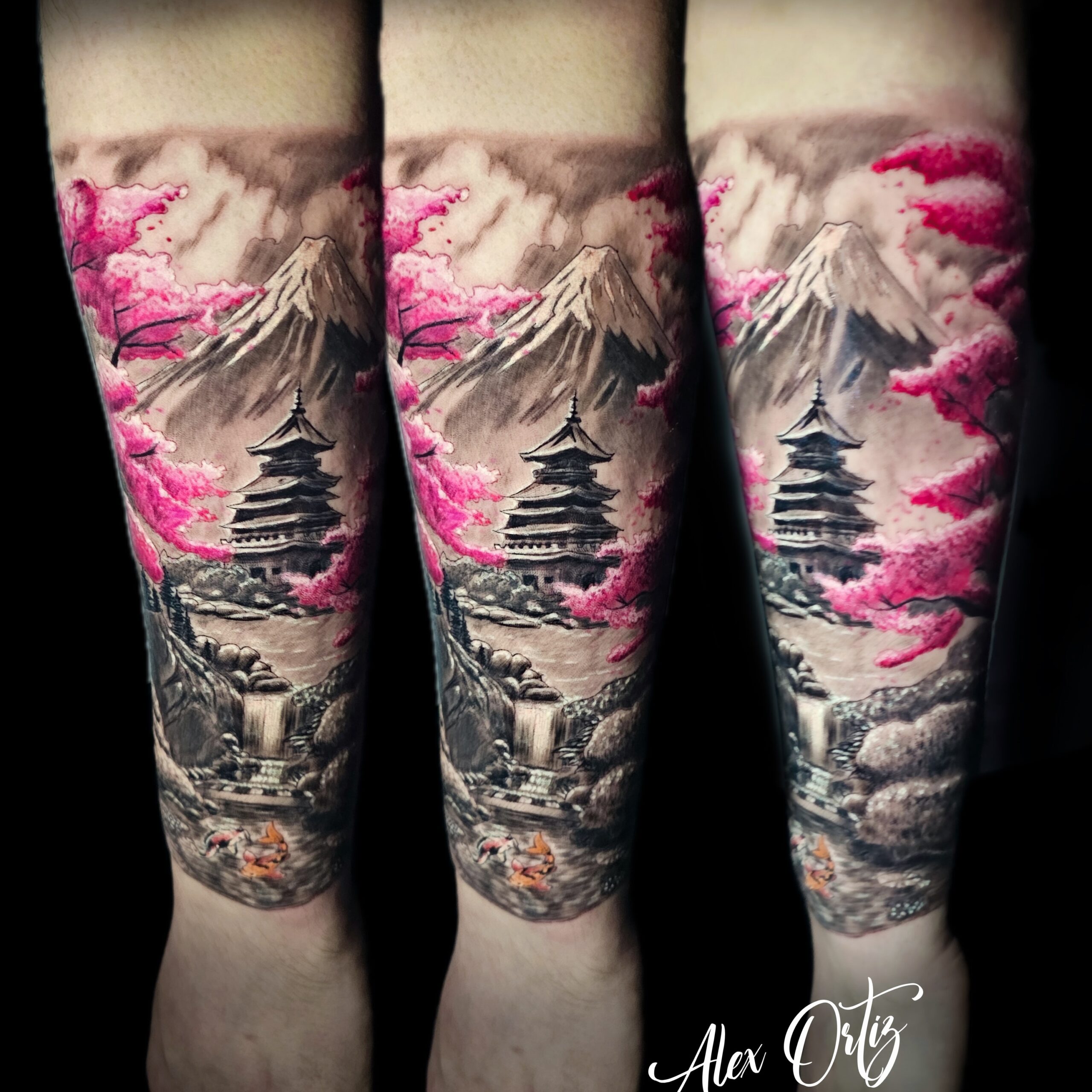

Japanese Style
What Is a Japanese Tattoo?
Japanese tattooing is the most structured tradition in the craft, and that structure is why it has lasted. Where most styles are collections of separate images, this one is compositional.
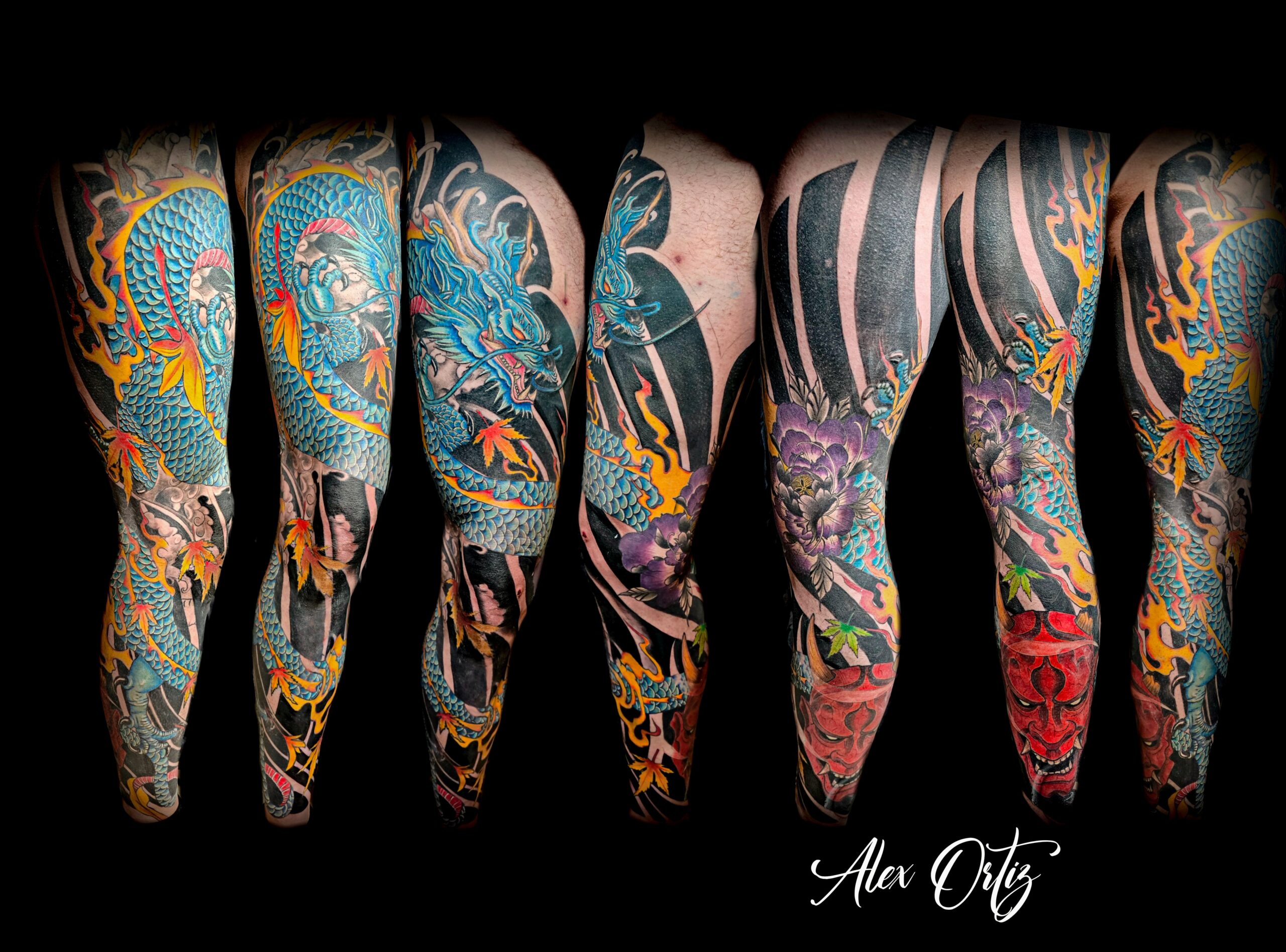
A piece is designed as a whole from the start: the subject, the background, and the way both flow with the body. Wind bars, water and cloud are not filler. They are the connective tissue that turns separate elements into one design, and they are why a well built sleeve reads as a single object rather than several tattoos near each other.
That logic is what most people are responding to when they say they want Japanese work, even when they cannot name it.
The Motifs
What the Traditional Subjects Mean
The vocabulary is specific and most of it carries meaning. It is worth knowing before you choose, because the tradition also pairs motifs by season and by story.
Koi
Perseverance. The direction of swim traditionally says whether a struggle is ongoing or overcome.
Dragons
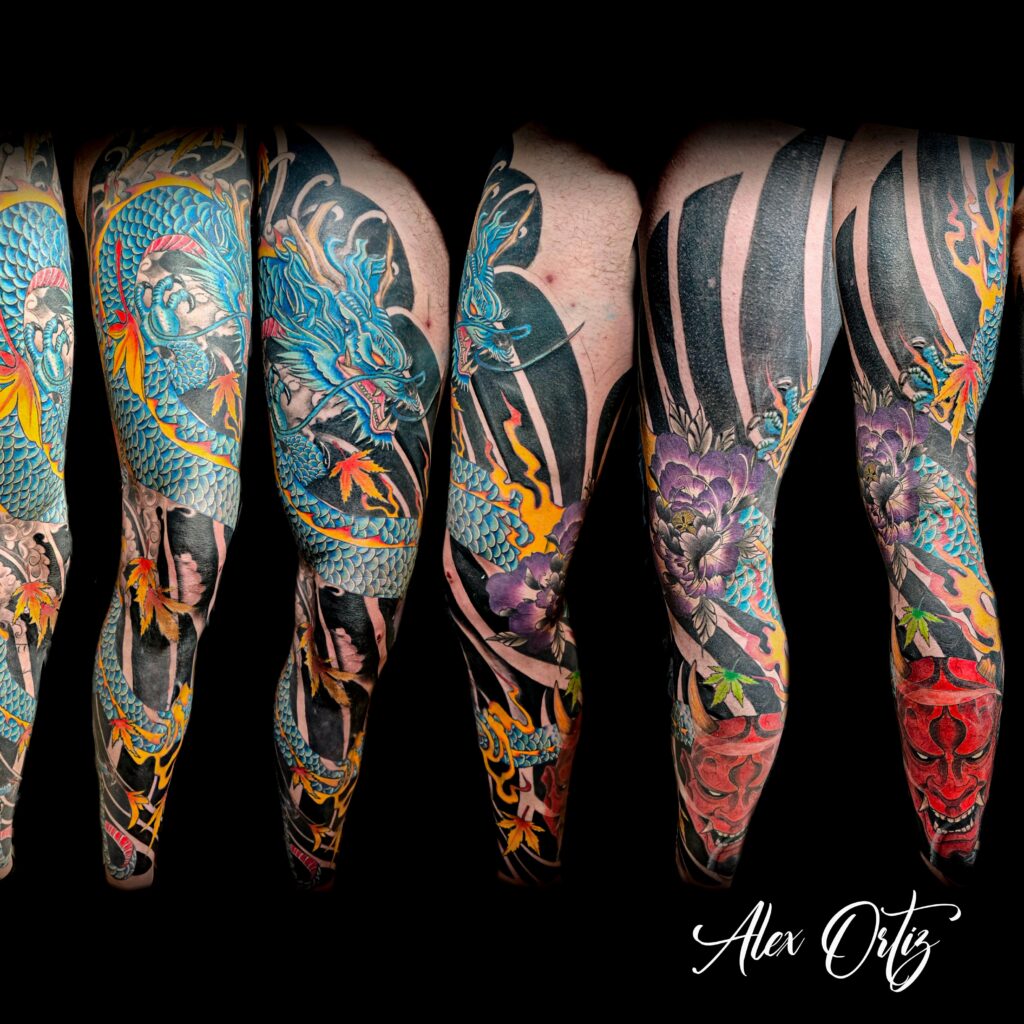
Wisdom, strength and protection, rather than the destructive reading Western designs give them.
Tigers
Courage, and protection against bad luck and illness.
Snakes
Regeneration, healing and good fortune.
Hannya Masks
Jealousy and grief in one face. Frequently misread as simply demonic.
Blossom & Peony
Cherry blossom for impermanence, peonies for boldness and prosperity.
Scale
How Long Does a Japanese Sleeve Take?
Longer than most people expect, because the style is designed large and a small Japanese piece works against the tradition rather than with it.
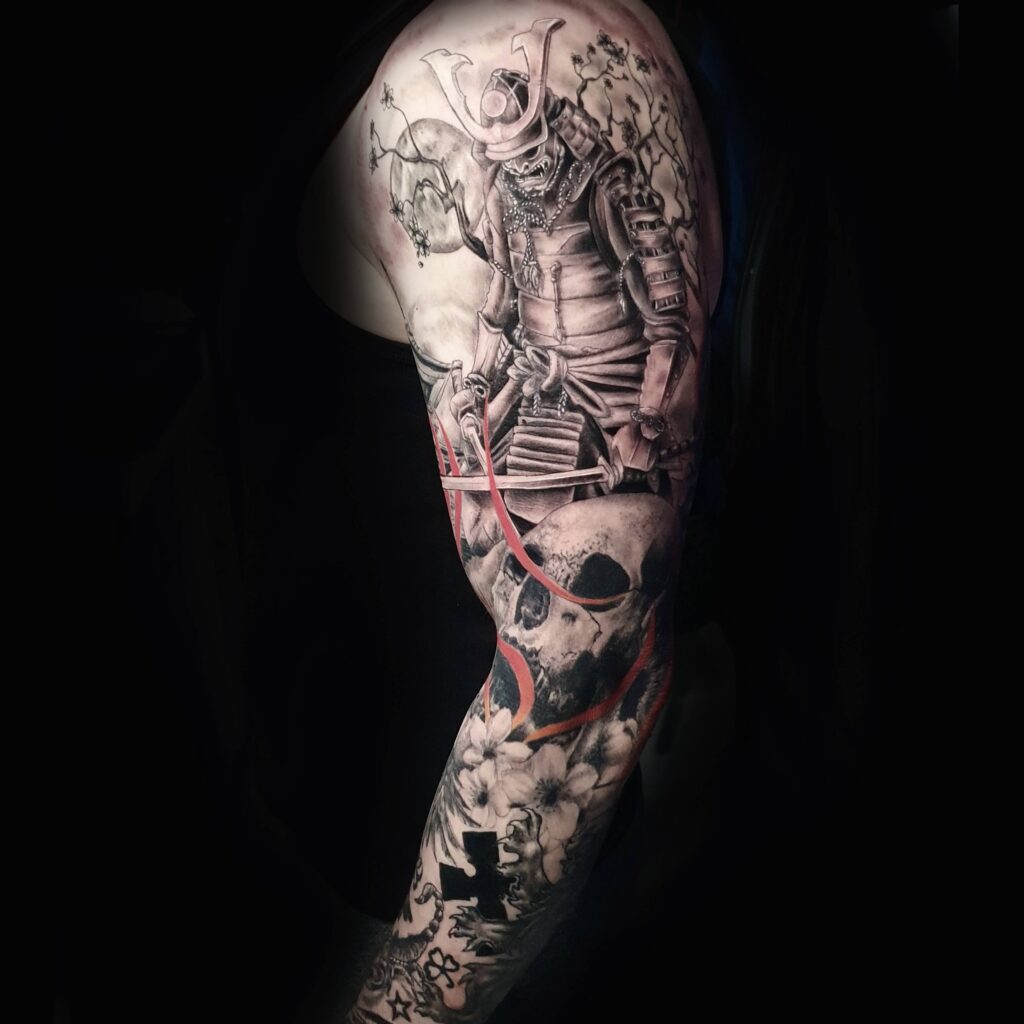
The whole logic, flow, background and composition across a limb, needs room to operate. A sleeve, a leg, a back panel or a chest piece gives it that. A single small koi on a forearm can be done well, but it is one image in a Japanese style rather than a Japanese tattoo in the structural sense.
In practice a sleeve is a series of sessions across months rather than one booking. It is worth understanding that before the first appointment rather than halfway through.

Planning
Planning a Sleeve or Back Piece
Large Japanese work is planned differently from most tattoos, and the difference catches people out.
The whole composition is decided before the first session: where the subject sits, which direction the flow runs, how the background carries around the limb, and where the piece ends. That endpoint matters more than it sounds. A sleeve that stops cleanly at the wrist looks intentional, and one that runs out of steam does not.
Work then proceeds in stages, usually outline across the whole design first, then background, then subject detail. That is why a large piece can look unfinished for months and then resolve quickly near the end, and why changing your mind halfway through is genuinely difficult.
Colour
Can Japanese Tattoos Be Black and Grey?
Yes, and both are traditional. Full colour is what most people picture: deep reds, greens and blacks against pale background work, bold and commanding at scale.
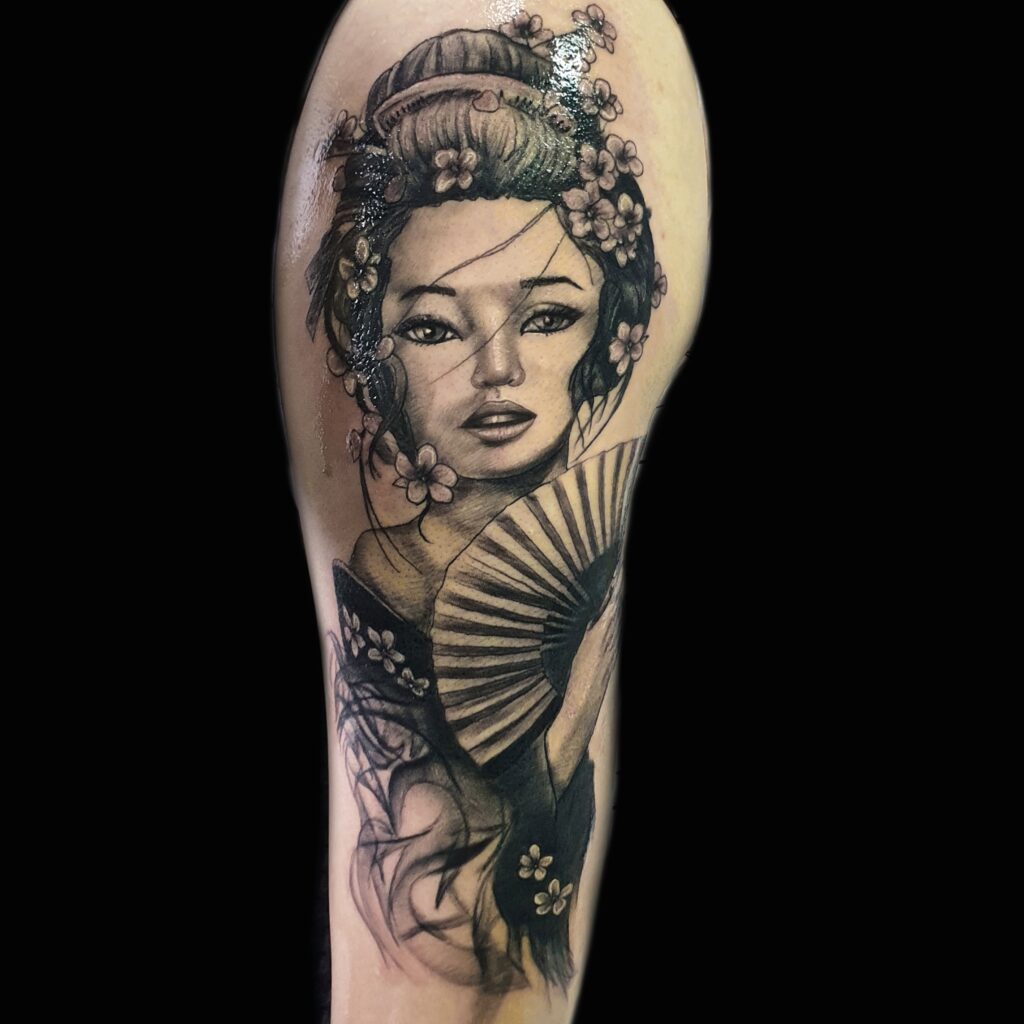
Tonal Japanese work has its own long history and is gaining ground, partly for its subtlety and partly because black pigment is the most stable in tattooing. The structure, motifs and flow are identical, only the palette changes. More on that approach on our black and grey page.
Either way the style ages well, for the same reason neotraditional work does: bold outlines and large clear shapes stay legible long after fine detail has softened. It is the opposite of fine line work in that respect.
Choosing
What to Ask Before You Book Japanese Work
Japanese tattooing rewards planning more than almost any other style, so it is worth asking a few questions before you commit.
Ask to see healed sleeve work rather than fresh photos. Ask how the background will carry around the limb, and where the piece will end. Those answers tell you whether someone is designing a composition or drawing separate images.
We work in the Japanese style: the motifs, the flow and the composition. Browse the portfolio and judge the work directly.
Pricing
Japanese Tattoo Prices in Maple Ridge
A one hour tattoo session is $140 and a two hour session is $320. The work is priced by time, so your cost follows how long each sitting takes.
Large Japanese work is a project rather than an appointment. It is normal and sensible to plan it in stages with a budget per session rather than trying to price the whole thing upfront. That conversation belongs at your free consultation. You can also see our pricing.
Japanese Designs Over Old Ink
Bold outlines, dense background work and large scale make this one of the better styles for covering an old tattoo, because there is plenty of dark shape to place where the old ink is heaviest. We assess every cover-up in person.
FAQ
Japanese Tattoo Questions
The questions people ask us most about Japanese style work.
Among the best of any style. They are built on bold outlines, large clear shapes and strong contrast between subject and background, so the composition stays legible long after the finest detail has softened. Sun protection is still the variable you control.
Most of the traditional motifs do, and the tradition also pairs them by season and story. You do not have to follow any of it, and plenty of good modern work plays with the conventions freely. It is worth knowing which rules you are breaking, because the difference between a choice and a mistake is whether you made it on purpose.
Yes. Tonal Japanese work is traditional in its own right and is popular now. The motifs, structure and flow stay the same, only the palette changes.
Not because of the style. What you feel depends on placement and on how long you sit, and this work involves long sittings across large areas like the ribs, chest and back. We break longer sessions up.
It is a fair question and worth thinking about rather than dismissing. The short version is that the motifs carry real meaning, so learning what your design says is respectful and getting it wrong is what people object to. If authenticity to the tradition matters deeply to you, a specialist irezumi studio is the better choice.
Come and Book Now
Book a Japanese Style Tattoo in Maple Ridge
You will find us at #5 – 22935 Lougheed Highway, Maple Ridge, on the upper level. We are open seven days a week from 10am to 9pm by appointment. Larger pieces are worth planning properly, so bring references and an idea of scale. For photographic detail instead, see our realism and portrait work.
Read our Google reviews, browse our work or see all our services.